© Wayne Wendel
Great Kiskadee
Pitangus sulphuratus
Family: (Tyrannidae) Tyrant Flycatchers
Preferred Habitat: Woodlands near water.
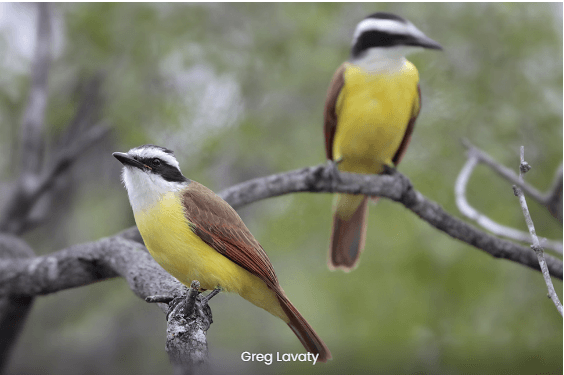
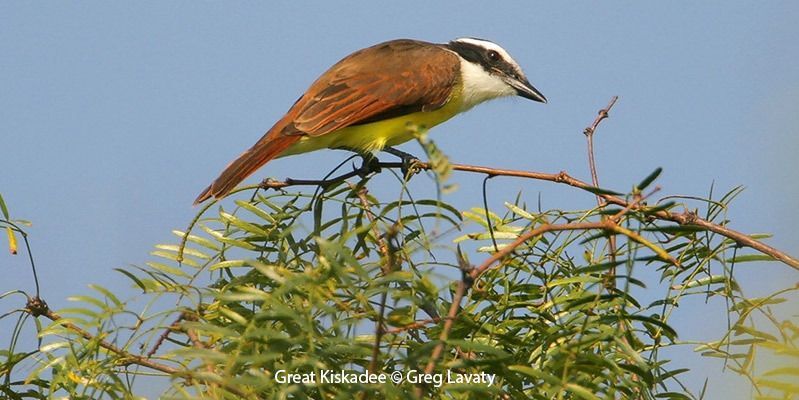
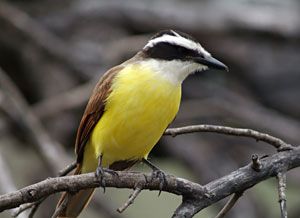
Profile by Spencer Poling: A Great Kiskadee hung around Smith Oaks for nearly three weeks in 2026! From March 9-28, this unique flycatcher made birding Smith Oaks extra exciting, with the chance of seeing it at any of the ponds. The sole member of their genus, Pitangus, Great Kiskadees are very unique birds. With their black and white striped face and heavy bill, it’s hard to confuse them with many other species in Texas.
I think this heavy bill is one of their most interesting features because it more resembles the bill of a kingfisher than the bills of other flycatchers. This bill is important because they behave like kingfishers, too. You can often find them perched on a low branch over water, waiting for a small fish to grab. However, these resourceful birds eat much more than just fish. Like other flycatchers, they perch in the open to hunt for flying insects and forage through trees, shrubs, and on the ground for a variety of small insects, reptiles, mammals, and fruits.
What do kiskadees, crickets, and chipmunks all have in common? They are all onomatopoeic, named after the sound they make! And if you said they’re all noisy, you wouldn’t necessarily be wrong, either. Great Kiskadees are known to be quite chatty, so you’ll often hear them before seeing them. If they’re in the area, they’ll let you know, which made this a fun bird to find every day at Smith Oaks!
While Great Kiskadees were once found only in the Lower Rio Grande Valley, they are now part of a growing trend of tropical birds expanding their range further north. There are many factors attributed to this, but climate change and the human alteration of habitat are unfortunately the primary causes. The Great-tailed Grackle and the Inca Dove are two examples of species that have already expanded their range north from southern Texas. With several breeding sites already established between Galveston and Harris counties, we’re hopeful Smith Oaks will become another annual nesting ground!